Playbook / Design practices / Blueprinting

Blueprinting
Service blueprinting is a design method used to map how a service operates across front-stage and back-stage activities, showing the roles, systems, data flows, and decision points that shape the user experience. It enables organisations to identify fragmentation, ownership gaps, and operational inefficiencies that cannot be seen from the user perspective alone.
Tips
1. Map systems and data flows alongside roles to reveal fragmentation causes
2. Identify ownership at each stage to highlight accountability gaps
3. Capture manual workarounds and reconciliation tasks as indicators of structural inefficiency
4. Use the blueprint to design governance, escalation routes, and monitoring mechanisms
5. Link failure points directly to operational or system improvement actions
The practice helps you
Build Trust
Create consistent, transparent experiences that foster user confidence
Deliver Delight
Create emotionally engaging or enjoyable experiences for
Drive Engagement
Encourage interaction and sustained user interest
Examples of practice
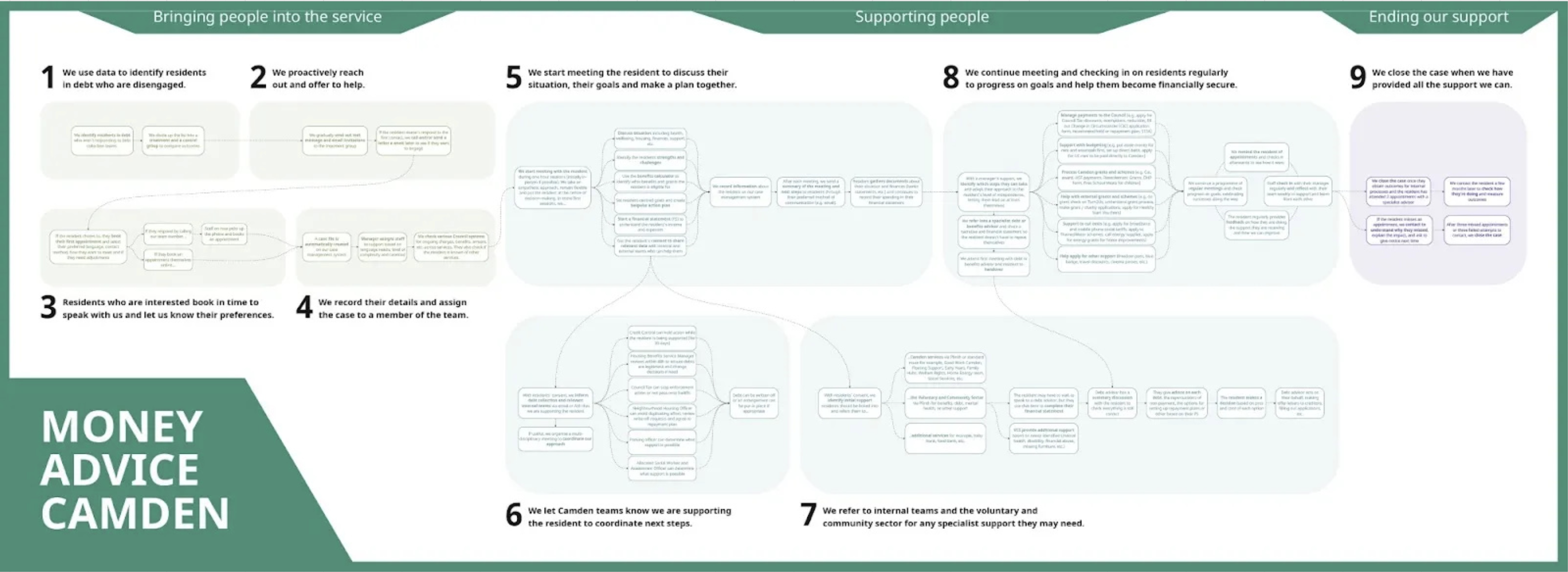
Journey Mapping: Shaping a New Approach to Debt Support
Camden set out to design a more joined-up, compassionate approach to debt and money-related support. Residents were facing fragmented services, often hitting crisis point before receiving help. The aim was to create and test a new approach to financial support that works across internal teams and external partners to help residents achieve long-term stability.
Elsa Bardout for Camden council | Published on 24th Jun, 2024
#process-mapping, #visualdesign, #cross-team-collaboration #debt-support, #financial-inclusion, #early-intervention
Supported by




 LGSDN
LGSDN 