Overview
Design Practice: Design brief
Service Area: Enforcement
Service Challenge: Organisational transformation
Design brief
A design brief is a document used to clarify the purpose, scope, and contribution of design within a project. It helps connect design work to broader objectives, align stakeholders around intent, and provide a shared reference for how design will support delivery and decision-making.
Project Summary
I worked on a review of enforcement services at the London Borough of Hounslow, looking at how a fragmented set of enforcement activities could be brought into a more coherent model. Enforcement in the borough spans responses to multiple issues such as fly-tipping, antisocial behaviour, noise complaints, parking offences etc. and was distributed across at least seven or eight teams, as well as contracted service providers.
This work was not happening in isolation. It followed a programme that sought to improve operations in Safer Communities service areas, which had already left teams adjusting to new roles and boundaries. At the same time, the council was implementing a major digital transformation aiming to create a single front door for residents. As a result, I was working within a system that was actively changing while I was trying to understand and redesign it.
Method
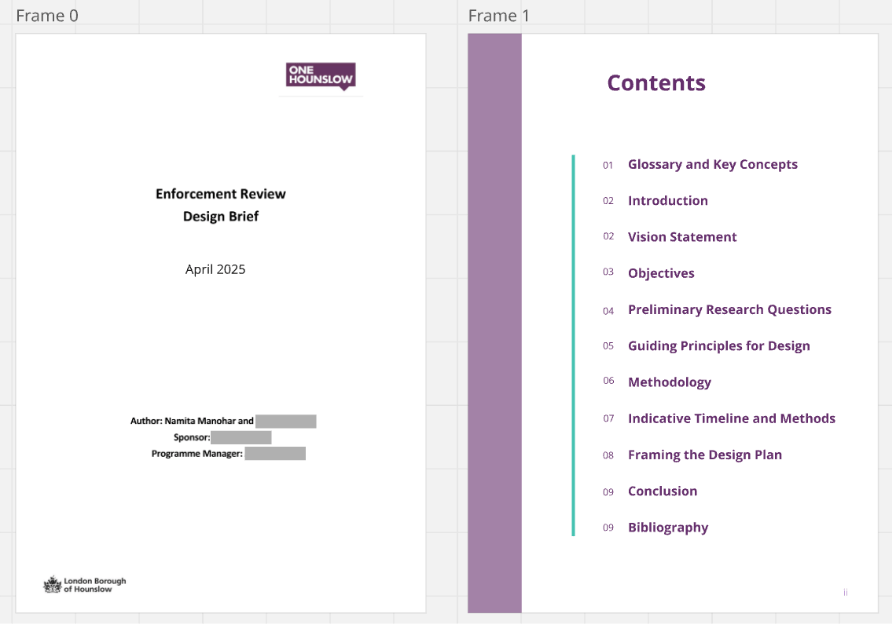
I introduced a design brief to position service design as a core part of the project rather than an add-on. I led the development of the brief, working closely with a supportive programme manager.
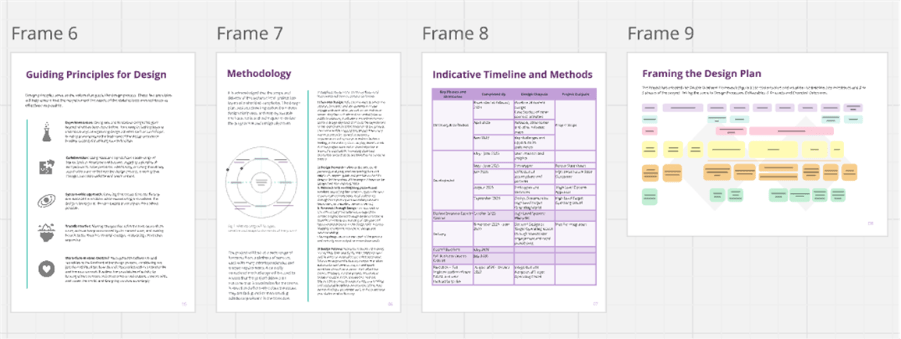
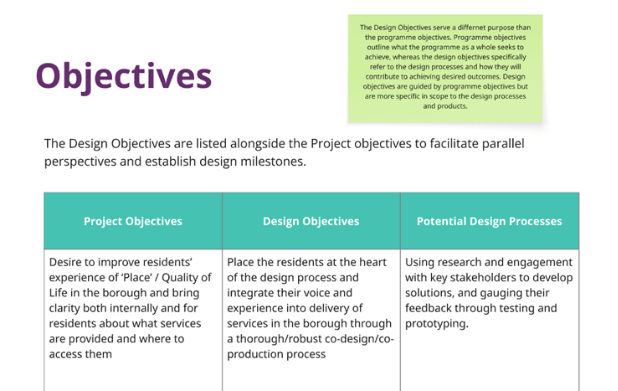
The brief outlined what design would do, how it linked to project objectives, and how it would support delivery. I deliberately avoided design jargon, using simple language to ensure accessibility for majority of non-designers. The objective was to communicate to those new to design that it is a way of working that shapes the project, rather than just a set of activities.
The Design Brief posed a test of organisational design readiness. Feedback from senior leadership highlighted concerns about reliance on designers and continuity after they leave.
At the same time, the project context was shifting rapidly. Governance, timelines, and dependencies were changing almost daily, which meant the document quickly became outdated.
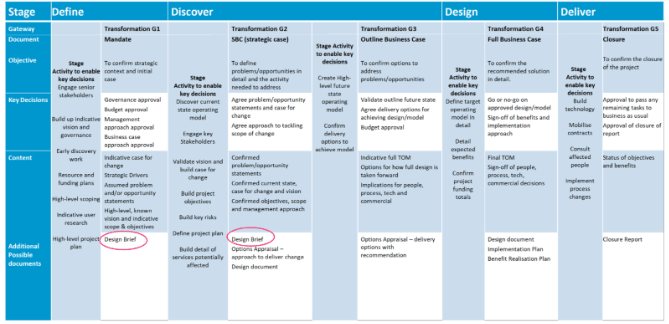
Consequently, the Design Brief was not formally adopted into the governance for the Review. However, it did influence how design was understood within the team of non designers and contributed to longer-term design maturity. This included the addition of a Design Brief as a recommended template to the team’s pool of project documentation and tools for use in future projects.
How this design practice supported the work?
The design brief supported the work by creating a clearer articulation of what design was contributing. It gave me a way to position design as integral to delivery and to connect it to outcomes that mattered to the organisation.
It also created a reference point for discussions about design, even when the document itself was not formally adopted. In that sense, it supported alignment indirectly.
Reflections
- Making design visible is part of the work
For growing design advocacy and maturity and capability within the organisation, explaining design was as important as doing design. - Resistance revealed underlying concerns
Questions about the brief pointed to deeper issues about continuity and ownership. The hesitation around the brief was not only about the document. It reflected concerns about ownership, continuity, and reliance on specialist roles. - Static artefacts struggled in a dynamic context
The pace of change meant the brief quickly became outdated. - Impact can be indirect and cumulative
Even without formal adoption within the project, the brief influenced internal ways of working. (more about this) It exemplified a tool that was integrated into the team’s set of project documentation tools for use in future Projects where design was to play a key role.

I am Namita Manohar, Service Designer at the London Borough of Hounslow.
 LOCAL GOVERNMENT SERVICE DESIGN NETWORK